

How Strengths shape performance
Strengths uncover what people are energised by at work.
They shape how individuals think, communicate, make decisions, and contribute to their teams. Strengths are not personality types, nor are they skills - they are all about energy.
When individuals work in ways that feel natural and engaging, they process information faster, collaborate more effectively, and sustain performance over time.
Understanding strengths creates better conversations about development, clearer alignment of work, and stronger team performance.
This page offers a compilation of our work on BeTalent Strengths:
the science, the models, the tools, and the evidence of impact.
Everything is grounded in rigorous research and designed to help organisations create environments where people can perform at their best.
BeTalent Strengths is a scientifically validated workplace assessment
“Using BeTalent Strengths feels clear, fair and genuinely insightful. The questions make sense, the choices feel real, and the results reflect how you actually show up at work.
As a leader, I trust the insights it provides to help build better teams and better conversations.”
Rev. Mike Wright, Programme Management Director, Network Rail
A More Practical View of Talent
Traditional approaches often focus on skills or gaps.
Strengths provide a more balanced and realistic view.
They help individuals understand:
What energises them
How they naturally contribute
Where they might overuse or underuse their Strengths
For organisations, this creates a more practical lens for talent development and more meaningful performance conversations.
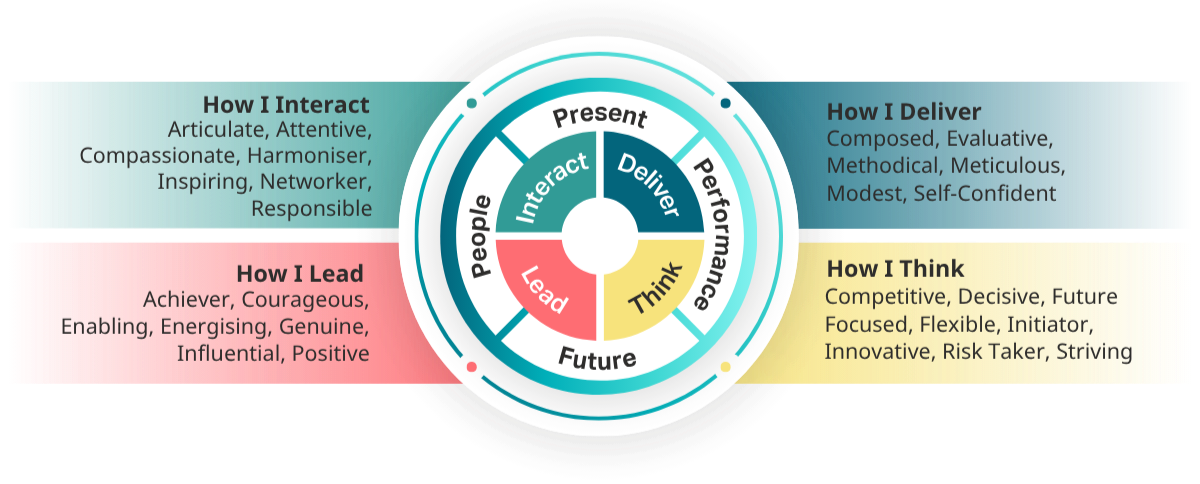
The 28 BeTalent Strengths
The Strength Dynamics
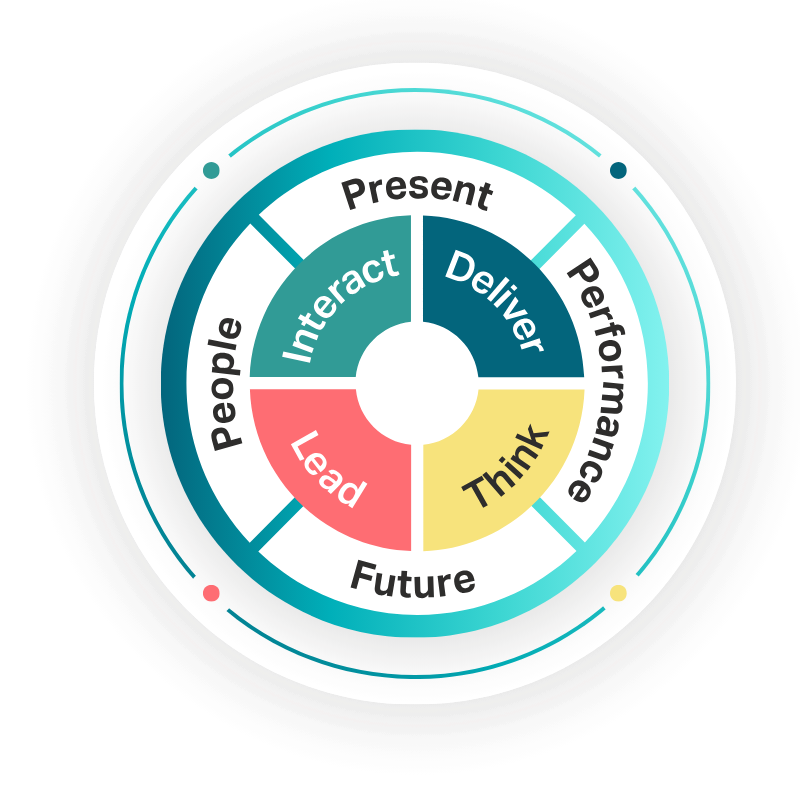
Each of the 28 strengths also sits within two simple dynamics that shape team style:
Present ↔ Future
(Present clusters with Interact & Deliver; Future with Lead & Think)
People ↔ Performance
(People clusters with Interact & Lead; Performance with Deliver & Think)
These dynamics make team patterns visible.
The 4 Dimensions
Through factor analysis we’ve shown that these naturally cluster into four practical dimensions that describe how people create value at work:
Interact – how you approach, include and build relationships with colleagues.
Deliver – how you organise yourself and your time to get results.
Lead – how you engage and energise others to deliver a vision.
Think – how you gather information, make decisions and drive change.
Seeing which dimensions you and your team are most energised by, helps you understand the impact you tend to have, the blind spots you may carry, and how to combine strengths to get the best from each other.
The Neuroscience Behind BeTalent Strengths
BeTalent Strengths is built on contemporary neuroscience that explains why people naturally excel in certain ways, and how the brain shapes consistent patterns of behaviour. Rather than treating strengths as personality “labels”, the framework reflects how networks of neural pathways develop, specialise, and energise individuals differently.
The neuroscience of BeTalent Strengths rests on three core pillars:

This is why strengths deliver both performance impact and human impact: they harness the brain’s natural architecture to help people work at their most authentic, energised best.
-
Each strength aligns with a network of brain circuits that has become efficient through a blend of:
Genetic predisposition (baseline wiring)
Experiential shaping (repeated activation)
Emotional reinforcement (dopamine-driven learning loops)
-
Behaviours connected to a person’s strengths often can activate the mesolimbic dopamine system — the brain’s reward pathway.
When a behaviour yields a sense of competence or flow, dopamine reinforces the associated neural circuits, making the strength even more automatic over time.
This is one reason why overplayed strengths can occur: the brain prefers familiar, rewarding pathways even when context has changed.
-
Strengths Reduce Load on the Prefrontal Cortex
The prefrontal cortex is responsible for executive functions such as planning, decision-making, and self-control. Using a strength requires less conscious regulation because the underlying networks are already well-established.
This frees up cognitive capacity, helping individuals:
Solve problems under pressure
Think creatively
Maintain emotional control
Stay resourceful in dynamic contexts
In short: strengths are a neural efficiency advantage.
-
Because strengths link to rewarding neural patterns, their use supports positive affect.
This has two effects:
Enhanced interpersonal behaviour: Strengths use correlates with increased activity in social cognition networks, supporting empathy, trust, and psychological safety — crucial in leadership and team dynamics.
Improved emotional resilience: A positive state broadens cognitive flexibility and helps regulate the brain’s threat response from the amygdala.
-
Areas that are not strengths require more activation of the prefrontal cortex, increasing cognitive load.
This is why they feel effortful, tiring, or inconsistent.
Weaknesses are not “broken circuits”, but rather underdeveloped routes that:
Require more attention
Yield slower, more effortful results
Do not trigger intrinsic reward
This is also why strengths-based development is more effective than deficit-reduction approaches
-
Growth Mindset & Neuroplasticity
BeTalent Strengths is also built on the principle that the brain remains plastic across life.
Although core strengths remain stable, individuals can:
Develop new supporting behaviours
Moderate overplayed strengths
Build complementary capabilities
This aligns with the adaptive rewiring that occurs when intentional behaviour is repeated over time.
Download a sample report
BeTalent Strengths provides a structured way to understand how people naturally operate at work. It maps 28 strengths across four dimensions, highlighting the behaviours most likely to show up when people are energised and under pressure.
This creates a clear view of how individuals contribute, where their impact is strongest, and where patterns may affect effectiveness.
“BeTalent’s Strengths product has a more sophisticated approach that goes beyond basic personality profiling, providing deep insights into our strengths and areas for development.”
Our Work with Strengths
Learn how other organisations have benefited from BeTalent Strengths. Here are just a select few case studies showcasing our work.

Turning Strengths and Resilience into Strategic Impact
Through a powerful blend of strengths-based coaching, resilience training and decision-making diagnostics, AtkinsRéalis partnered with BeTalent by Zircon to elevate the performance and cohesion of its executive leadership team.

Leadership Blueprint for a Seasonal, High-Scale Business
With BeTalent by Zircon, Haven transformed leadership development into a scalable, data-powered programme that empowers managers across 39 locations to lead vibrant, self-contained communities across the UK.

Transforming Recruitment through Inclusive Design
With a strengths-based framework powered by BeTalent, Brooks Macdonald redefined recruitment – reducing bias, expanding talent reach, and surpassing diversity targets.
Our CEO’s podcast takes a research-led, scientific look at how people, teams and organisations can use and understand psychology to be happier, healthier, more productive and more engaged.
Discover thought leadership on resilience and subscribe to get the latest insights.
Thought Leadership Library
At BeTalent by Zircon, we’ve been researching strengths for years. Below is a compilation of our published research, thought leadership and additional resources to further your learning.
-
![]()
The impact of a strengths-based approach on employee resilience, drive and innovation
Amanda Potter & Monika Mark
Strengths play a critical role in shaping performance and resilience at work. Our research found a significant relationship between individual strengths and how people are perceived as resilient, driven, and innovative. When teams bring together diverse strengths and ways of thinking, they are more likely to sustain performance under pressure and drive innovation.
-
![]()
Harnessing cognitive diversity in the age of AI
Amanda Potter & Jig Ramji
As AI reshapes the workplace, what will truly set organisations apart is not technology, but people. This research explores how cognitive diversity and human-centred strengths like empathy, curiosity and adaptability are becoming critical to success in the Intelligence Revolution. It challenges over-reliance on AI and data-driven decisions and makes the case for a more inclusive, strengths-based strategy to identify and develop future leaders.
-
![A young woman confidently sits with a diverse group of colleagues. She is sharing her work. The article the image sits with is about Understanding the relationship between personal strengths and psychological safety]()
Understanding the relationship between personal strengths and psychological safety
Amanda Potter & Jessica Ross
After working on several client projects that explored levels of psychological safety and the benefit of playing to our strengths, it was hypothesised that there could be a link between psychologically safe environments and whether individuals were empowered and enabled to leverage their strengths. Our analysis determined that there is a relationship between the concepts and the implications of this are discussed.
-
![]()
Assessing the critical ingredients for organisational success through talent: Introducing a robust winning attitude audit grounded in scientific research
Amanda Potter & Lauren Albrecht
Drawing on interviews with CEOs, elite athletes and business leaders, this research identifies ten core attributes that underpin a ‘winning attitude’ and shows how these interact with individual strengths to accelerate performance. Crucially, it challenges the belief that talent alone predicts success. Discover the science behind what it truly takes to win, and how to embed it across your organisation.
-
![]()
Strengths and generations
Amanda Potter & Rhys Connolly
Drawing on data from over 1,900 professionals worldwide, this research uncovers how strengths evolve across generations, and what that means for performance, motivation and team dynamics. The findings challenge common assumptions and reveal distinct patterns in how different age groups apply their strengths. Crucially, it highlights why a one-size-fits-all approach to development no longer works. Understanding generational strengths can unlock more effective, diverse and high-performing teams.
-
![]()
Investigating the critical characteristics of an inspirational leader
Amanda Potter
Drawing on insights from nearly 200 senior leaders across global organisations, this research unpacks the distinct qualities that set inspirational leadership apart from executive presence. It reveals that while presence may create impact, it is a deeper blend of emotional and social qualities, such as integrity, vision and the ability to engage others, that truly inspires performance. Leadership development efforts can cultivate these qualities with the right focus and support.
-
![]()
Last Tango in Malice
Amanda Potter
Post M&A, the dust swirls and settles and so begins the strange boardroom dance – with OTT politeness – as the merging leadership team weigh each other up and toast a new dawn. A well calibrated C-suite is, of course, critical to successful transitions, but it’s not always simpatico.
This article reveals why purpose, energy and strengths are the real differentiators in helping newly formed leadership teams succeed. Understanding what motivates leaders and how their strengths interact can unlock engagement and sustained performance.






Click here to subscribe to Leading with Perspective, our LinkedIn Newsletter
-
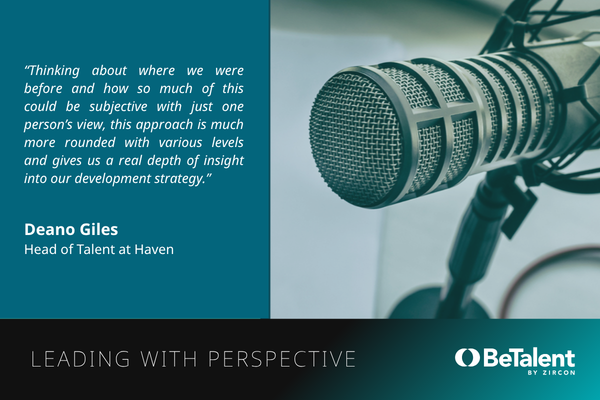
Haven's Vision for Personalised Leadership Development
In Conversation with Deano Giles, Head of Talent at Haven
Haven partnered with BeTalent to redesign its leadership blueprint for General Managers across 39 unique holiday parks. Using a blend of 360 feedback, strengths profiling and psychological insight, the programme uncovered what great leadership really looks like in a fast-changing hospitality environment. The result was not just a development framework, but a scalable talent strategy connecting recruitment, succession planning, wellbeing and performance through one shared leadership language.
-

Raising the Bar for Talent Assessment in a Global Market
By Emily Willis
In today’s fast-changing talent landscape, effective hiring is no longer just about identifying technical skills, it’s about understanding the whole person. This article explores the growing importance of evidence-based, human-centred talent assessment in an era shaped by AI, hybrid work and increasing pressure to hire fairly and effectively. Drawing on decades of psychological research, it challenges organisations to move beyond algorithms alone, ensuring technology enhances rather than replaces human judgement.
-
Empowering Neurodiversity: Strategies for Inclusive Workplaces
By Angela Malik
This article explores practical, research-backed strategies to help leaders create environments where neurodivergent employees can truly thrive. Drawing on insights from business psychologist and neurodiversity consultant Ellice Whyte, it offers actionable ways to embed neuroinclusive practices into everyday leadership.
Share the Strengths Resource Pack
Download our research, publications and case studies, all in one handy pack, ready to share with colleagues and stakeholders.
Wondering how to deploy Strengths in your team?
Get in touch to discuss your specific challenges and opportunities, and we’ll put our best minds on the case.